Founded, 2026. Product design, identity, website, motion
MakeBook
Likes don’t make things. Orders do.
- Company
- MakeBook, founded 2026
- Year
- 2026
- Role
- Founder and CEO; product and design
- Scope
- Product design, identity, website, motion
- Live
- makebook.xyz
Brief
In autumn 2025 Alan Yang started a clothing brand and sold its first pieces as pre-orders. People liked the designs, but likes could not say how many would actually buy, or at what price and quantity a run makes sense. Independent brands face the same bind: make first and risk dead stock, or ask strangers to trust an unknown brand with their money.
Idea
Fixed rules, written into a contract. A seller sets the price, the minimum and the deadline, and after review those terms are locked. Buyers sign in with an email and pay in USDC, held in escrow on Injective. If the minimum is met, the seller is paid in three stages, 40, 50 and 10 per cent; if it is missed, every buyer is refunded in full.
Made
The product end to end, from seller review to listing, ordering, escrow, shipping, staged payouts and refunds; the identity, a triangle of stacked cubes; the website and a film. MakeBook took first prize in the Injective Blockchain × AI track at AdventureX 2026 in Hangzhou and is incubated by Ninja Labs. It runs on testnet; mainnet is next.
The brand site
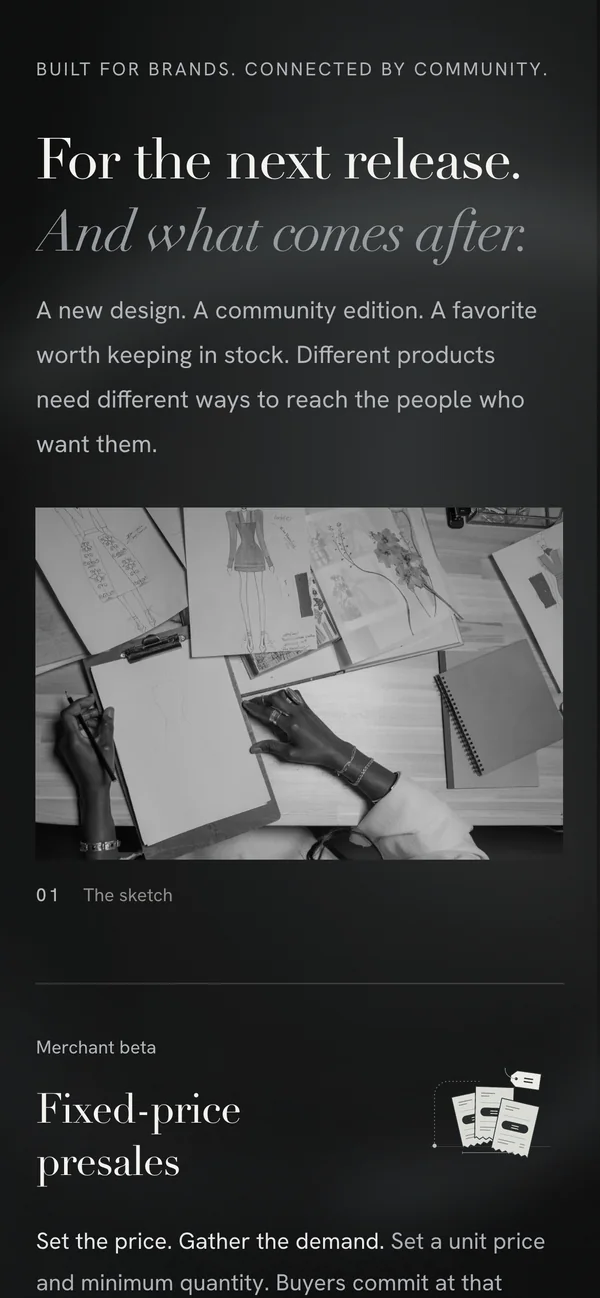
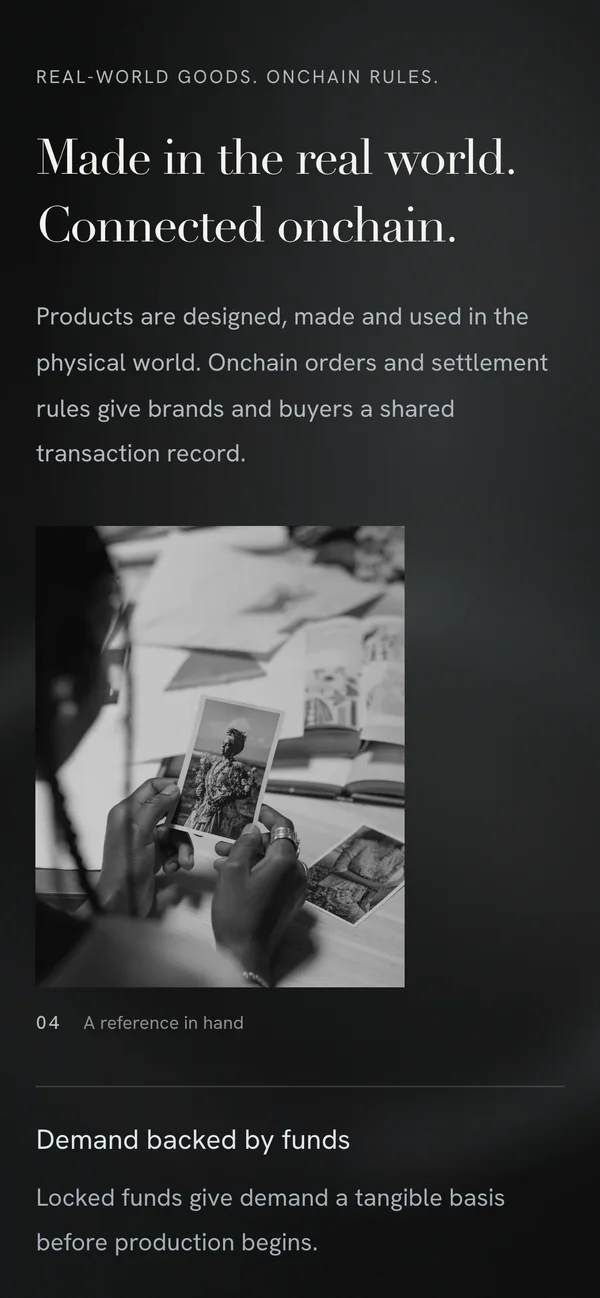
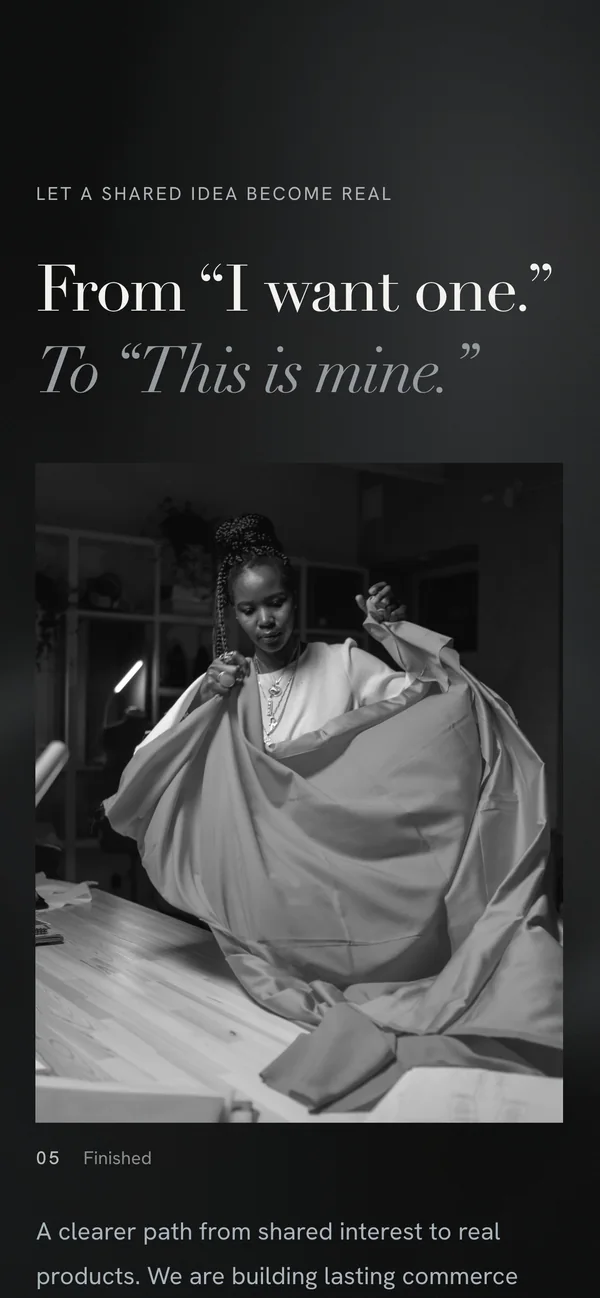
A pre-order platform has to explain money before it can sell anything. The site does it in plain sentences, real photographs and one number at a time.
The marketplace
Buyers pay into escrow; a run goes ahead only if its minimum is met. The app says what happens to the money at every step.
The seller’s side
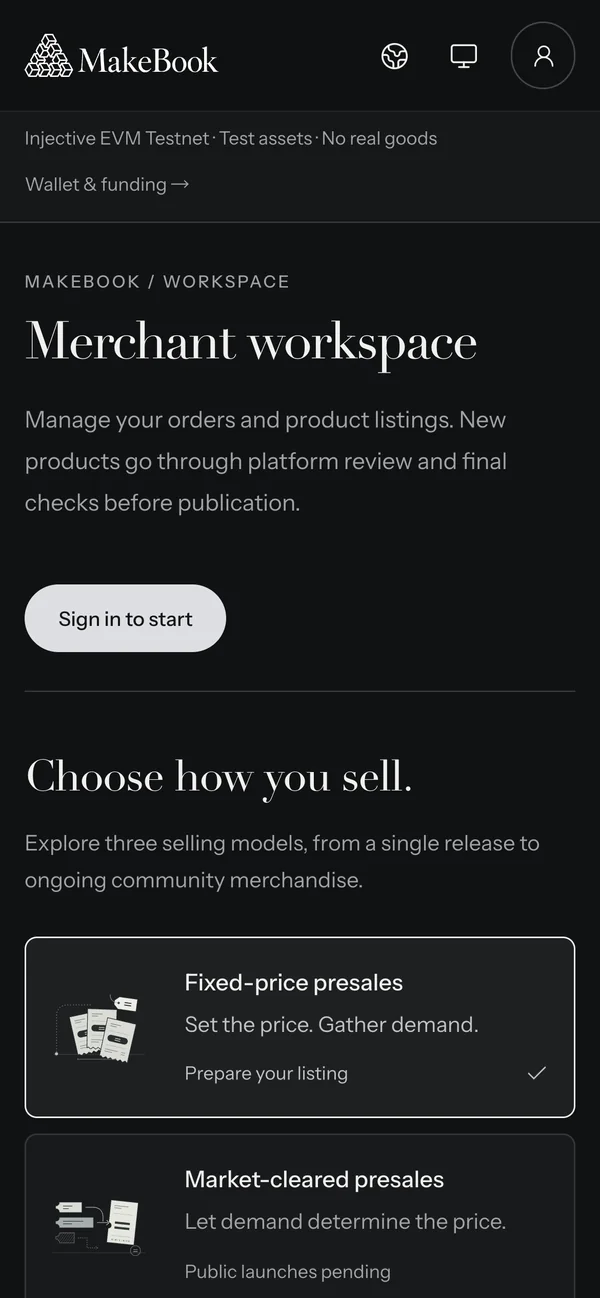
A seller chooses how to sell, sets the price, the minimum and the dates, and prepares the run in one workspace.